
Construction Loans in Connecticut: What Developers Should Know Before Starting a New Construction Project
Blogs·Nov 15, 2026
The most consequential construction decision often happens before anyone pours a foundation: choosing what to build, on which site, and for whom. Developers researching construction loans in Connecticut should first test whether their project can withstand an imperfect schedule, an unresolved site condition or a slower-than-expected exit. Financing cannot repair an investment whose basic assumptions do not hold together.
This guide examines those decisions rather than loan products or advertised terms. It covers residential and commercial planning, the trade-off between a new build and redevelopment, and the budget risks that deserve attention before a developer commits to construction. Examples are hypothetical planning situations, not descriptions of A4-funded projects or forecasts of Connecticut market performance.
Connecticut's Changing Real Estate Development Landscape
Connecticut real estate development requires a closer view than a statewide opportunity story. A vacant building, an available parcel and an attractive neighborhood can suggest a project, but none establishes demand for the proposed finished property. Developers need current local evidence, not assumptions that every residential or commercial segment is moving in the same direction.
Changing property requirements are best investigated through prospective users. Would a business tenant require greater electrical capacity, a different loading arrangement or more parking? Would a homebuyer value a practical floor plan more than additional square footage? Test these questions with local brokers, competing properties and potential occupants before design decisions become expensive to reverse.
For example, someone evaluating an office redevelopment in Hartford County should examine whether the proposed layouts serve the tenants they intend to attract. A small mixed-use concept in New Haven County needs separate evidence for its storefront and residential components. These are opportunities to investigate, not recommendations to build either property type.
Use county references to organize research, then move to the actual parcel and municipality. Confirm the applicable planning rules, infrastructure and site conditions with qualified local professionals. A project becomes investable through that investigation, not through its address alone.
What Makes a Construction Project Financially Viable?
Define the investment objective before buying the site
A property intended for sale and one intended for long-term ownership should not share an interchangeable financial model. The first depends on net sale proceeds and the time needed to receive them. The second depends on income after operating expenses, lease-up and the capital required to hold the asset. State the objective before negotiating land acquisition.
Work backward to the acquisition price the project can support. Include development expenditure, selling or leasing costs, carrying expenses and the return required for taking the risk. A parcel advertised as a bargain may be expensive once access improvements, unusable land or an unsuitable building footprint are considered.
Separate evidence from assumptions
For every major budget item, identify whether it is a contractor quote, a professional estimate or an unresolved allowance. Obtain enough site information to understand the difference between gross acreage and usable building area. Check legal access, restrictions and utility availability rather than assuming the seller's proposed concept is buildable.
Then test the result under less favorable conditions. What happens if completion slips, the sale price falls or leasing takes longer? Calculate the remaining return after all project costs, not simply the difference between construction expenditure and headline value. A fallback exit is useful only if its income, operating costs and capital needs have been assessed independently.
Commercial Construction Projects: Planning Beyond the Building Budget
Commercial construction financing in Connecticut should be considered alongside a property's ability to function and generate income. Completing the shell does not necessarily create an occupiable, rentable asset. Tenant improvements, commissioning, operating reserves and the interval between completion and rent collection belong in the development plan.
Retail and mixed-use developments
Retail design starts with the intended business: customer access, visibility, deliveries, waste handling and the systems its operation requires. A restaurant and a professional-services tenant can need very different space. Before pricing a generic storefront, decide who pays for tenant-specific improvements and what must be installed by the developer.
Mixed-use projects add coordination problems. Residential privacy, commercial deliveries, entrances and building systems must work together. Model the uses separately, including any different completion and leasing dates. Residential occupancy should not be assumed to solve an unleased commercial component.
Office, business and multifamily properties
An office project needs a credible tenant-size strategy and layouts that can accommodate it. Review subdivision flexibility, accessibility and operating costs with the design team. An attractive lobby cannot compensate for floor plates that do not suit prospective occupants.
For multifamily construction, compare the proposed unit mix with evidence of renter preferences and competing supply. Include maintenance, management, insurance, utilities paid by the owner and vacancy in the operating analysis. Starting lease-up is not the same as reaching stabilized income; the plan must fund the interval.
Industrial and warehouse developments
Industrial feasibility depends on function: truck circulation, loading, clear height, floor requirements, power and the intended use. A hypothetical warehouse proposal in New London County should verify these requirements with prospective users before finalizing the building footprint. Space that is technically available but operationally unsuitable may be difficult to lease.
These considerations are general development guidance, not a statement that A4 finances every commercial construction category. Confirm the financing fit for the specific asset and scope rather than extending a residential program description to commercial projects.
New Construction vs. Redevelopment: Evaluating the Investment
Ground-up construction offers control over the building's layout and systems, but introduces the cost of creating them. Redevelopment can preserve useful structures and infrastructure, yet existing conditions may limit the design or introduce work that cannot be fully priced before investigation.
Compare both routes against the same investment objective. For an existing property in Middlesex County, a developer might assess renovation, an addition and replacement construction before selecting a scope. Each scenario should identify usable space, remaining useful life of retained systems, disruption, approvals and the finished property's intended use.
Do not treat an existing utility connection as proof that service capacity is adequate. Likewise, retaining a building does not establish that its structure, fire protection or accessibility arrangements can support a different use. Have the relevant professionals identify what stays, what changes and what remains uncertain.
If the comparison favors a new build, explore New construction financing after defining the scope. Ground-up construction financing should support the chosen development strategy, not decide it before the alternatives have been evaluated.
Luxury Construction Projects and High-Value Developments
Luxury development creates a particular planning challenge: the specification can keep expanding while the intended buyer remains unchanged. Separate features that support market positioning from preferences that add cost without a clear commercial purpose.
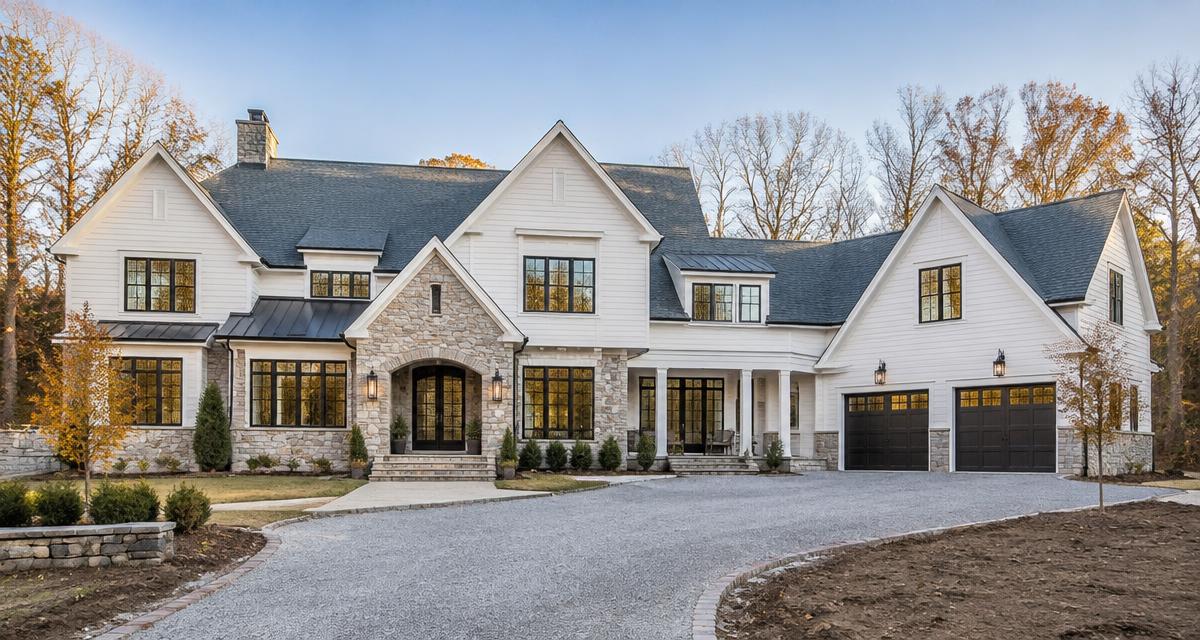
For a hypothetical custom investment home in Fairfield County, document decisions about architecture, glazing, stonework, cabinetry, mechanical systems and landscape design early. A spec property without a committed buyer needs disciplined selections; customization for an unidentified future purchaser can leave the developer carrying an expensive but narrowly appealing home.
Estate-scale planning in Litchfield County might involve coordinating the main house with access, exterior works and additional structures, if proposed. Review the entire scope rather than scheduling each element in isolation. Specialty trades, design approvals and long-lead materials can affect when another contractor can begin.
Developers comparing luxury construction loans should understand how design changes affect the project's total capital requirement. Substituting a more expensive material can change delivery dates, installation labor and related details, not just the purchase price. Keep a selection deadline and an approval trail for each substantial change. High-end development benefits from design ambition, but its budget needs boundaries.
Hidden Costs That Can Affect a Connecticut Construction Project
A cost is often described as unexpected because nobody was responsible for resolving the assumption behind it. Before committing to the build, review these exposures with the project team:
- Site preparation and excavation: investigate grading, subsurface conditions, drainage, access and material removal. Obtain appropriate testing rather than relying solely on a visual inspection.
- Utility connections and infrastructure: confirm capacity, connection locations, required upgrades and responsibility for work outside the building. Obtain provider input before treating service as available.
- Environmental assessments: prior uses or site conditions may warrant specialist review. Identify the appropriate assessment with qualified advisers; this article does not determine a parcel's environmental obligations.
- Zoning and permitting delays: distinguish an application submitted from an approval received. Verify applicable municipal and other reviews, unresolved conditions and dependencies before promising a start date.
- Material and labor fluctuations: record quote validity, exclusions and procurement responsibilities. An old estimate is not a current commitment to deliver the specified work.
- Construction changes: track redesign, substitutions, additional engineering and knock-on schedule effects. Price the whole change rather than its most visible item.
No statewide cost allowance can establish what these items will cost on a particular Connecticut site. Where a price is unresolved, show the uncertainty explicitly and decide what evidence is needed before acquisition or construction proceeds.
How Developers Can Reduce Financial Risks Before Breaking Ground
Create decision gates, not just a checklist
A feasibility review should identify conditions that must be resolved before money becomes irreversibly committed. Examples include acceptable site findings, a workable design, credible trade pricing and an investment case that survives a delay scenario. Assign an owner and a decision deadline to each unresolved issue.
Build a contingency that remains available
Separate known work from genuine uncertainty. An unpriced but essential utility upgrade is planned expenditure, not a surprise to hide in contingency. Reserve contingency for risks that remain after reasonable investigation, and revisit it as design and site knowledge improve.
Select contractors and subcontractors for relevant scope experience, staffing capacity, coordination and the clarity of their proposals. Compare exclusions as carefully as prices. Resolve responsibility for purchasing, installation, insurance and change approval before competing bids are treated as equivalent.
Monitor the forecast cost to finish
Track approved budget, committed contracts, paid expenditure, pending changes and forecast remaining cost together. Spending less than planned halfway through construction does not prove the project is under budget if major packages remain uncontracted. Reconcile the forecast whenever new information changes the scope.
Manage the schedule around dependencies: design decisions, approvals, procurement, inspections and work that must precede another trade. For each material delay, identify its financial effect and the response. Adjust the procurement sequence, scope or capital plan where feasible rather than leaving the original completion date unchanged on paper.
Preparing for Your Next Construction Investment in Connecticut
A useful pre-construction plan connects the property, its future users, the design, the budget and the timetable. It also identifies what could invalidate the investment and what the developer will do if an assumption changes. That is more valuable than a polished rendering supported by an untested spreadsheet.
Whether you are investigating new construction loans in Connecticut for a residential investment or evaluating the broader economics of a development, settle the project strategy before committing to financing. A4 Capital Partners can be a potential financing resource for a suitable business-purpose residential construction project, subject to review; the planning discussion here does not establish an approval or a commercial-program commitment.
When your scope and investment case are ready for a financing conversation, explore Construction loans in Connecticut. Keep the practical question at the center of that conversation: can the project still be completed and exited responsibly when execution does not follow the best-case plan?