
Construction Loan in South Carolina: Financing Ground-Up Builds in Charleston and Beaufort
Blogs·Nov 20, 2026
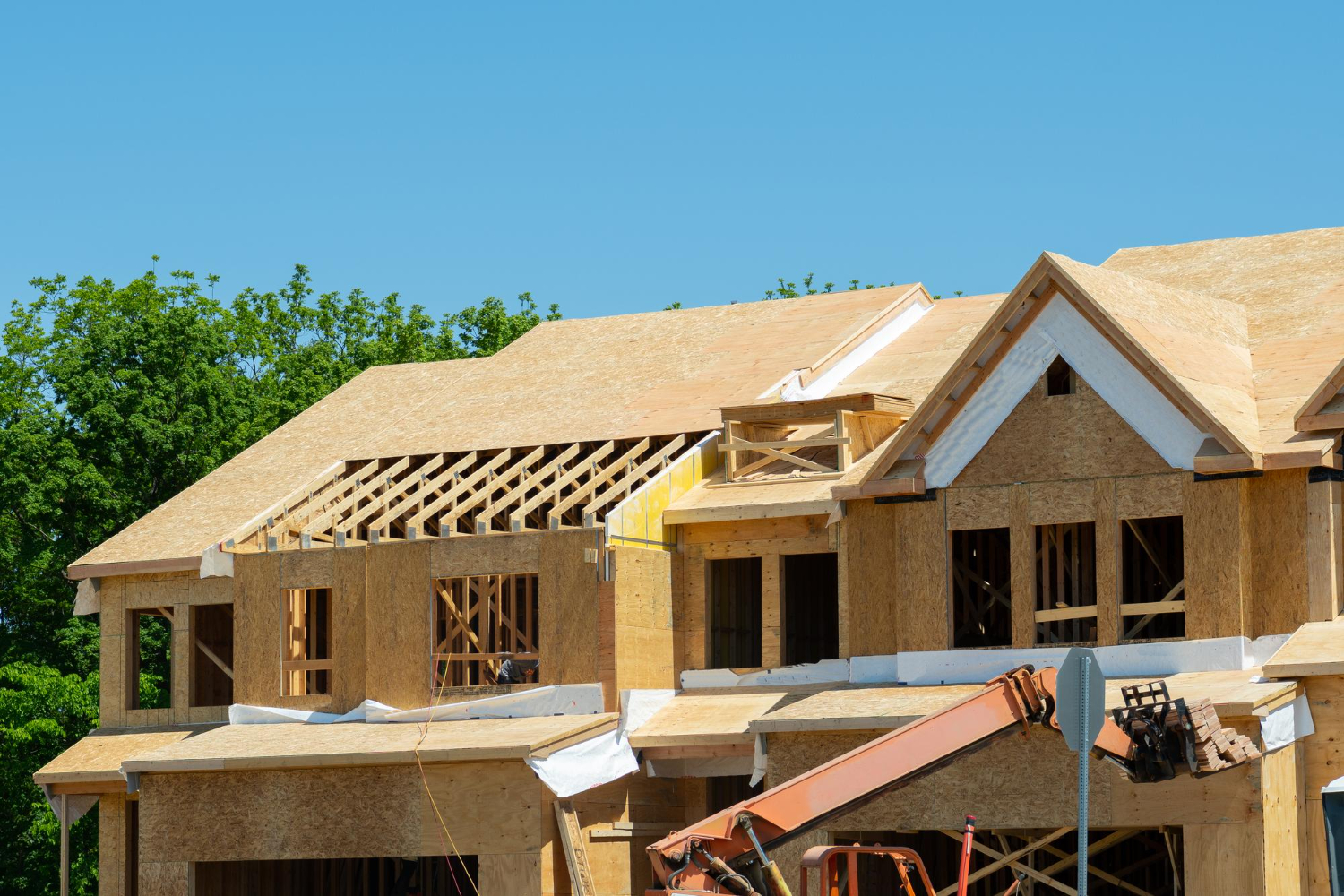
A construction loan in South Carolina can help an experienced builder or investor fund a ground-up home in Charleston or Beaufort. Construction money is typically released in stages, called draws, and the loan is repaid when the finished property sells or is refinanced. This guide covers business-purpose financing for investment property, not a construction-to-permanent mortgage for a home you plan to live in.
Before you negotiate a loan amount, answer a more immediate question: What will you have to pay for before the first draw arrives? A lot can look profitable on paper and still strain your cash if foundation work costs more than expected, custom materials require deposits, or lending and contractor payment schedules don’t match.
Start With the Parcel, Not the Loan Amount
Get the parcel number and confirm which city, town, or county has jurisdiction. A Charleston or Beaufort mailing address doesn’t tell you who reviews the plans. Ask your local project team to identify which approvals apply, which are in hand, and which could change the house you’re pricing. A permit on a checklist is one thing; a review that might change the footprint or foundation is a budget issue as well as a scheduling issue.
Build a short record of the unresolved items. For each one, write down who will confirm it and what decision depends on the answer. “Utility connection pending” is too vague to finance around. “Contractor will update the trenching scope after utility location is confirmed” tells a lender what might change and why. Use A4’s guide to construction loans in South Carolina to check the markets and investment projects A4 reviews.
Charleston and Beaufort: Two Different Budget Conversations
Charleston: Price the Home You Can Actually Build
For a Charleston infill lot, check whether design or historic review applies before treating the preliminary plans as final. If it does, identify which parts of the specification could change and hold off on nonrefundable orders that depend on them. The City of Charleston also requires permits for development in its mapped Special Flood Hazard Area and elevation certificates for new construction there. Confirm requirements with the relevant authority for the actual parcel; city rules should not be assumed to apply throughout Charleston County.
A practical step is to ask the builder for a new budget when the approved design changes, rather than carrying the old estimate forward with a larger contingency. If review changes the windows, exterior materials, or foundation, record the new price alongside the new delivery date. Those two changes may also move the timing of the next draw.
Beaufort: Separate the House From the Cost of Preparing the Lot
For a coastal investment build in Beaufort County, including the Hilton Head area, identify the relevant permitting office and verify the parcel’s flood designation. Beaufort County’s flood verification materials distinguish mapped flood status from drainage problems that can exist outside a mapped special hazard area. Ask your site team what the parcel needs in practice and your insurance broker what coverage is available for that plan. Neither question is answered by the listing description.
Keep grading, drainage, access, utility connections, and foundation work visible in the budget rather than folding them into a single cost per square foot. Compare contractor bids line by line: a cheaper quote that excludes a driveway or utility connection may not be cheaper when you price the full job. If a cost still depends on an engineering decision, label it as an allowance and identify when it will be replaced by a quote.
Ask your insurance broker to quote the project as designed and to flag any exclusions or deductibles that could leave you paying a significant bill yourself. Confirm when coverage needs to start, when it ends, and what changes if the finished house sits vacant while it is marketed. Put the quoted premium in the budget and treat the deductible as a separate cash exposure, not as part of the premium.
How Much Can You Borrow? Compare Cost and Completed Value
Loan-to-cost (LTC) compares the loan with the lender’s approved project costs. Loan-to-value (LTV) compares it with the property value used in underwriting, which for ground-up financing can be the appraised value as completed. A4 advertises rates of 8.5%+, a $1M minimum loan amount, and ceilings of 85% LTC and 75% LTV. Those figures are not a quote or a promise of funding. Confirm what the lender includes in its cost calculation rather than assuming every dollar in your development budget is eligible.
Illustrative example, not a quote or a local cost estimate: Assume a $2 million approved cost and a $2.2 million completed value. At the advertised ceilings, the cost test gives $1.70 million and the value test gives $1.65 million. The value test is tighter. Even at $1.65 million, the borrower would need $350,000 for the balance of approved costs, plus cash for any costs and reserves not covered by the loan. The eventual commitment could be lower.
Now suppose the foundation needs $60,000 of additional work. Unless the lender approves a change to the loan, plan to cover the difference. A higher construction cost does not necessarily increase the property’s value. That is why a contingency is more useful when it is earmarked for actual unknowns than when it is treated as spare money available for finish upgrades.
Schedule Draws Around What Your Contractor Must Be Paid
A draw schedule shows when money can be released from the construction portion of the loan. Before closing, lay it next to the contractor’s payment schedule and mark the gaps. Ask the lender who requests inspections, what invoices or lien documentation are needed, when a request counts as complete, and what happens if part of a phase is unfinished.
| Project stage | What to confirm |
|---|---|
| Site work and foundation | Which work must be complete before the first draw, and who pays for it in the meantime? |
| Framing and material orders | Are deposits or stored materials eligible, and what records are required? |
| Finishes and closeout | What inspections, paperwork, or holdbacks affect release of the final funds? |
Model the cash low point, not just the cash required to close. In one hypothetical month, a builder owes a $45,000 window deposit and $80,000 of trade invoices before a $65,000 draw can be released. The builder needs $125,000 available before that draw, plus other bills due in the same period. The fact that $65,000 may arrive later doesn’t make it available for payroll or for the next material order today.
Run the same schedule with one draw arriving later than planned. Suppose the foundation inspection moves back and the framing crew still expects its deposit on the original date. Decide whether you can keep the crew booked from cash on hand, negotiate a later deposit, or have to move the start date. Then check which other trades depend on framing being finished. This is more useful than adding a flat sum to the budget and assuming it will be enough. Update the cash forecast when a trade changes its payment terms, not just when the builder issues a change order.
Plan for the Time Between Finishing and Getting Paid
For a luxury spec home, the sale is the repayment plan. Compare the proposed home with closed sales that a prospective buyer would reasonably consider alternatives. Explain differences that affect price, such as location, lot setting, layout, and finish level. Use active listings to see the competition, not to establish what buyers have paid.
Write down what happens if the home takes longer than planned to sell. Include insurance, property taxes, interest, maintenance, and selling expenses in the budget. Check when the loan matures and what an extension would cost if one were available. If you intend to hold and refinance, test that alternative separately against realistic rent, expenses, and future lending requirements. A refinance that works only at your preferred valuation is not a dependable fallback.
What to Bring to the First Financing Conversation
- Site and approvals: Parcel address, signed contract or ownership evidence, current plans, and a list of outstanding reviews.
- Construction budget: A dated contractor bid, allowances that need quotes, and a separate contingency.
- Sources and uses: How much goes to land, construction, fees, and reserves, and where each source of cash comes from.
- Work and payment schedule: Milestones, contractor payment dates, expected draw timing, and large supplier deposits.
- Builder and exit: Relevant completed projects, the contractor’s role, comparable sales, and a plan for repaying the loan.
If the design and contractor’s bid don’t describe the same home, fix that before submitting the package. When you’re ready to compare terms, review A4’s new construction loan program and bring the parcel, budget, draw questions, and exit plan to the conversation. That gives both sides a clearer starting point than a requested loan amount on its own.
Frequently Asked Questions
What is a construction loan in South Carolina?
For an investor, it is short-term financing for a new build, with construction funds typically released in stages. The loan is usually repaid from a sale or refinance. A4’s program is for business-purpose, non-owner-occupied projects, not personal residences.
Can the loan cover the land purchase and the build?
It may cover part of the lot purchase at closing and hold back construction funds for later draws. If you already own the lot, ask how the lender treats the land basis, any existing debt, and available equity. Neither structure is automatic.
Can I request terms before my permits are issued?
You can discuss the project while approvals are pending. Identify what is outstanding, who is handling it, and when you expect an answer. An initial discussion or term sheet is not permission to start work or a guarantee that the loan will close.
Does being in a flood zone rule out construction financing?
Not by itself. The important questions are what can be built on the parcel, what design and documentation the jurisdiction requires, and whether the associated construction and insurance costs are accounted for.
How much can I borrow for a ground-up build?
A4 advertises up to 85% loan-to-cost and up to 75% loan-to-value, subject to underwriting. The lender’s approved cost basis and completed-value assessment may constrain proceeds, and the final loan can be smaller than either advertised ceiling implies.
Can I use a draw to pay a deposit on custom windows?
Do not assume a deposit or off-site material is eligible. Ask what the agreement allows and what proof is needed. If the deposit is not eligible before installation, plan to pay it from available cash.
How is a luxury spec home valued without a buyer under contract?
Start with relevant closed sales and explain meaningful differences in location, site setting, condition, size, and finish quality. A listing price is not evidence of a completed sale, and a higher build cost does not automatically produce a higher valuation.
What should I submit to A4 for an initial review?
Bring the parcel address, site control, plans, status of approvals, an itemized budget, builder information, and the proposed exit. A4’s initial response and terms turnaround is 1 business day; that is not a closing or funding promise.