
Construction Loans in Colorado: Financing Options for Real Estate Investors and Builders
Blogs·Nov 10, 2026
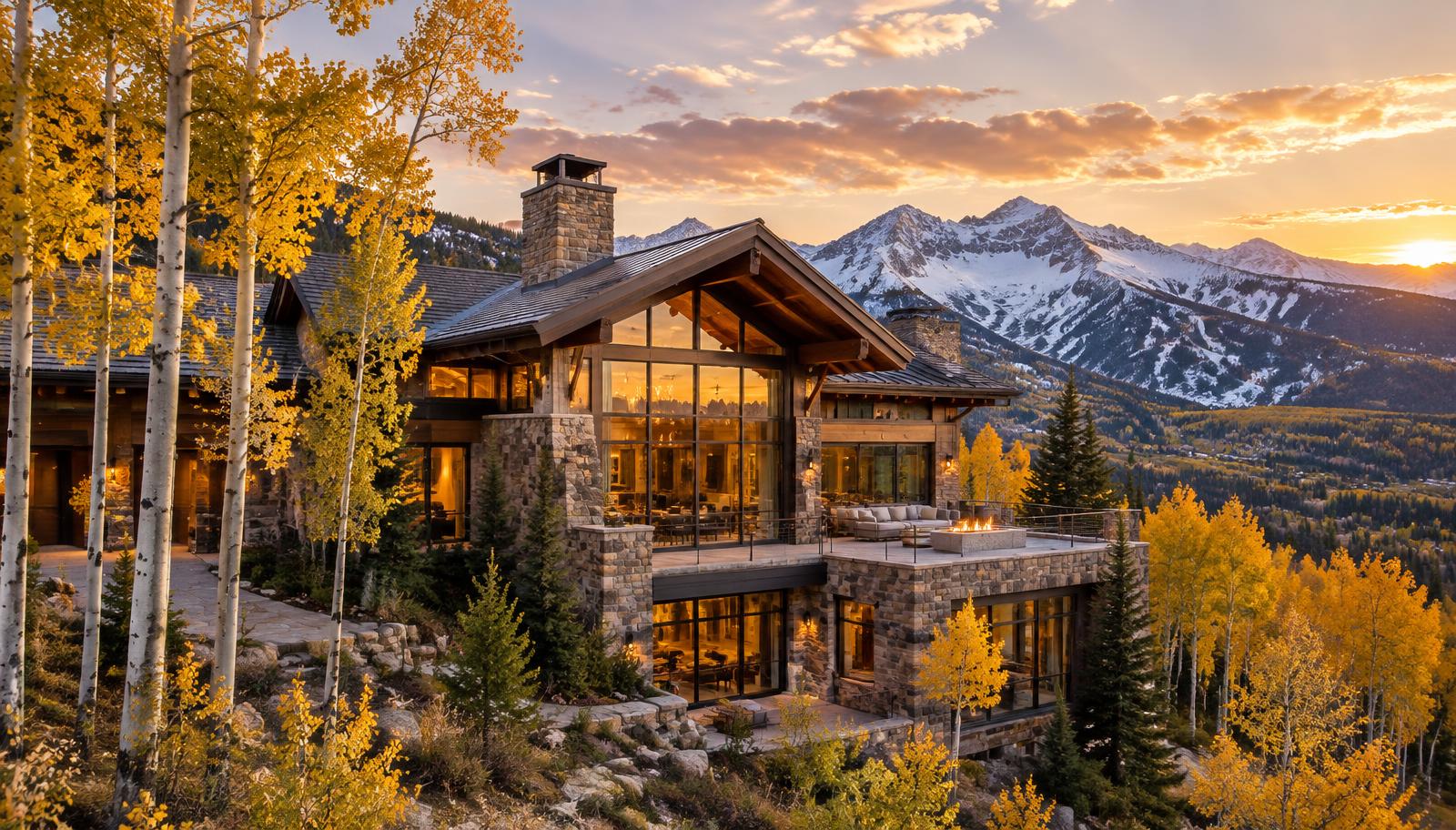
A construction loan in Colorado is short-term, business-purpose financing that covers the cost of building or substantially rebuilding an investment property. Unlike a mortgage on a finished home, the money is released in stages as the work is completed, and the loan is repaid when the property sells or is refinanced. For investors, builders and developers, it is the standard way to fund ground-up projects, spec homes and teardown/rebuild deals that banks are slow or unwilling to finance.
Colorado adds its own wrinkles. A luxury spec home in Aspen is underwritten differently from an infill build in Denver or a second-home project in Durango, and the financing has to reflect the site, the schedule and the exit. This guide explains how construction loans work, what lenders look for, and how to structure a Colorado project so it holds up in underwriting. For A4's current terms and county-level project notes, see our construction loans in Colorado page.
Understanding Construction Loans in Colorado
A construction loan finances the creation of a property rather than the purchase of a finished one. The lender approves a total loan amount based on the project, then disburses it in draws tied to completed phases of work: foundation, framing, mechanicals, finishes and so on. You pay interest as funds are drawn, and the loan comes due when the project is complete or when its term ends.
Three features separate construction loans from conventional property mortgages:
- Staged funding. A mortgage funds once at closing. A construction loan funds over months, against inspected progress.
- Project underwriting. The lender evaluates the budget, the builder, the plans and the finished value, not just the borrower's income and the existing property.
- A defined exit. Construction loans are short-term by design. The repayment plan, usually a sale or a refinance, is part of the approval.
Investor construction loans are also business-purpose loans. They finance properties you intend to sell or hold as an investment, not a home you plan to live in. That distinction matters: it is what allows private lenders to underwrite the deal and the sponsor's experience rather than personal income, and it is why these loans are not consumer construction-to-permanent mortgages.
Types of Construction Financing Available in Colorado
Colorado construction loans are not one product. The structure follows the project.
Ground-up construction loans
Financing to build a new property on a lot you own or are acquiring. The request can include the land basis and the approved construction budget in one loan, with draws funding the build. This is the core product for spec builders and developers.
Luxury home construction financing
Ground-up financing for high-value homes, where the finished value, finish level and buyer profile drive the underwriting. In Colorado this is concentrated in resort and mountain markets such as Aspen, Snowmass, Vail and Beaver Creek, where completed values support larger loan sizes and longer build schedules.
Spec home construction loans
A spec home is built for resale without a buyer under contract. Because there is no pre-sale, lenders lean harder on comparable sales, the builder's track record and a realistic marketing period. The exit is the sale, so the file has to show what the finished home competes with.
Teardown and rebuild financing
Common in established neighborhoods where the land is worth more than the house on it. The purchase price of the existing home is generally treated as land basis, and demolition, site work and construction are budgeted separately. Overpaying for the existing structure tightens the loan-to-cost math from day one.
Investment property construction loans
Financing for properties built to be held and rented rather than sold. The exit is typically a refinance into longer-term debt, so lenders underwrite the projected income and the borrower's ability to qualify for the take-out loan, not just the sale comparables.
How Construction Loans Work in Colorado
The mechanics are consistent across lenders, even where terms differ.
Project evaluation
The lender reviews the site, the plans, the budget, the sponsor's experience and the exit. Expect to provide site control (a purchase contract or proof of ownership), plans and specifications, permit or approval status, and an itemized budget.
Land and construction costs
The approved project cost usually combines the land or acquisition basis with hard costs (labor and materials), soft costs (design, engineering, permits, insurance, financing costs) and contingency. Lenders want these separated, because each is verified differently.
Loan-to-cost and loan-to-value
Most construction lenders apply two limits and lend the lower result. Loan-to-cost (LTC) caps the loan as a share of the approved project cost. Loan-to-value (LTV) caps it as a share of the appraised value, which for a build is usually the projected completed value. A4 advertises a maximum of 85% loan-to-cost; on an illustrative $1,000,000 approved cost basis, that ceiling is $850,000 of financing and at least $150,000 of borrower equity, before reserves and excluded costs.
Borrower equity and experience
Construction lenders expect the borrower to have meaningful cash in the deal: the equity portion of the budget, plus carrying reserves for interest, taxes and insurance. Experience matters because execution is the main risk. A first-time builder can still be financed, but the strength of the general contractor and the conservatism of the budget carry more weight.
Draw schedules and disbursements
Funds are released against completed, inspected work. A typical draw request involves an inspection or verification, supporting invoices, and a release of funds for that phase. Draws reimburse work already done, which means you need working capital to pay subcontractors before each draw lands. Ask any lender how inspections are ordered and how many days pass from request to funding; slow draws stall projects.
Completion and exit
When the build is complete, the loan is repaid from the sale or from a refinance. Sophisticated borrowers write down two exits: the primary plan and the fallback, such as a price adjustment that still repays the loan or a refinance into a rental loan if the sale timeline slips.
Construction Loan Requirements for Colorado Investors and Builders
Requirements vary by lender and by project, but the review almost always covers the same ground:
- Creditworthiness and financial strength. Enough liquidity to fund equity, contingency and carrying costs, not just the down payment.
- Construction experience. A track record of completed projects, or a strong contractor and team if the sponsor is newer.
- Project feasibility. A budget and schedule that an experienced reviewer believes, with a visible contingency line.
- Detailed construction budgets. Itemized hard and soft costs that map to the draw schedule.
- Contractor qualifications. Licensing, insurance and capacity to deliver the scope on schedule.
- Property valuation and equity. An appraisal or valuation supporting the completed value, and real borrower cash in the deal.
- Exit strategy. A documented sale or refinance plan, ideally with a backup.
None of this is a guarantee of approval, and maximum advertised leverage is a ceiling, not an offer. Final terms depend on the site, the scope, the sponsor and complete underwriting.
Financing Construction Projects Across Colorado
Colorado is not one construction market. Project types and financing needs differ between the Front Range cities and the mountain resort communities, and the loan request should reflect where the project actually sits.
Denver
The Denver metro is Colorado's largest construction market, with infill single-family builds, teardown/rebuild projects in established neighborhoods and small multifamily development. Financing here is driven by comparable sales density: there are usually plenty of recent sales to support the completed value, but also plenty of competition, so acquisition discipline matters. Budgets should account for city permitting timelines rather than assuming a best-case schedule.
Colorado Springs
Colorado Springs supports a broad range of investor construction, from single-family spec homes to small multifamily. Loan sizes tend to be smaller than in the luxury mountain markets, so check that the project clears the lender's minimum loan amount, and expect the exit to be judged on a wide set of suburban comparables.
Boulder
Boulder projects skew toward high-value single-family construction and substantial renovation. Land costs are high relative to construction costs, which concentrates the loan-to-cost pressure in the acquisition. The financing file should separate land basis from build costs cleanly and support the finished value with truly comparable recent sales.
Fort Collins
Fort Collins is a growing Northern Colorado market for single-family investment construction and selective infill. As with Colorado Springs, loan sizes are generally moderate, and the underwriting centers on the sponsor's experience, the budget and a straightforward sale or refinance exit.
Aspen and Snowmass
Aspen and Snowmass Village are ultra-luxury construction markets: custom investment homes, teardown/rebuild projects and high-end renovation at the top of Colorado's price range. The financing questions are scale and support. The completed value has to be documented with comparable properties that genuinely match the planned quality, location and scale, and the file should show contractor capacity, site-work assumptions and liquidity for a longer carrying period. Larger loan sizes are available here because finished values support them.
Vail and Beaver Creek
Vail, Beaver Creek, Edwards and Avon combine luxury custom and spec construction with resort renovation and investor second homes. A resort build should identify the parcel, the proposed specifications and the resale or investment-refinance strategy, with a project-specific budget rather than a regional cost average. Mountain builds can face seasonal scheduling constraints, so carrying costs should be modeled with a delay case.
Durango and the southwest
Durango is a priority market for luxury single-family and investor second-home construction in southwest Colorado. Requests should explain the site, the target buyer and the finished-home comparables, with the loan tied to the construction budget, available equity and a realistic completion-to-sale period. Crested Butte and other previously approved Colorado markets remain part of the broader lending footprint.
How to Choose the Right Construction Loan Lender in Colorado
The interest rate is one line item. The lender's process often costs or saves you more than the rate does. Questions worth asking every lender:
- Is the lender lending its own capital? A balance-sheet lender controls its credit decisions; a lender that sells or syndicates its loans can change terms or slow down when its funding source does.
- How do draws actually work? Who orders inspections, what documentation is required, and how many days pass from draw request to funding?
- Is interest charged on drawn funds or the full commitment? On a long build, interest on drawn funds only can save a meaningful amount.
- What are the extension terms? Cost, conditions and how many extensions are allowed if the schedule slips.
- Are there prepayment penalties? A spec builder who sells early should not be penalized for it.
- Does the lender understand investment projects? A lender that underwrites business-purpose deals will evaluate your exit and your budget; one that treats you like a consumer borrower will not.
- Can you reach the decision-maker? Direct access to the person making the credit decision shortens every conversation that matters.
Then model the total cost of each offer over the time you actually expect to carry the project, including a delay scenario. A lower rate with high fees, slow draws or expensive extensions can cost more than a higher headline rate.
Construction Financing Solutions from A4 Capital Partners
A4 Capital Partners is a balance-sheet lender providing business-purpose construction financing to experienced builders, developers and real estate investors in Colorado. A4's construction programs cover luxury spec homes, ground-up residential projects and teardown/rebuild investments, with a focus on the state's luxury mountain markets, including Aspen/Snowmass, Vail/Beaver Creek and Durango, alongside its broader Colorado footprint.
A4's advertised construction terms include:
- Loan sizes from $500K to $12MM
- Rates starting at 8.5%
- Loan-to-cost up to 85%
- Loan-to-value up to 75%
- Average processing of 5–10 days once the file is complete
- No application fee
Because A4 lends its own capital, the underwriting conversation is direct: the project, the budget, the sponsor and the exit. Construction funds are advanced through an agreed draw process as work progresses, and the team reviews completion financing for partially built projects as well. You can review the full program on A4's new construction financing page, or request terms for a specific Colorado project through the Colorado construction loans page linked above.
These programs are for non-owner-occupied, business-purpose investment property. A4 does not offer construction loans for a home you plan to live in.
Frequently Asked Questions About Construction Loans in Colorado
What are construction loans in Colorado?
Short-term, business-purpose loans that finance the building or substantial rebuilding of an investment property. Funds are released in draws as work is completed, and the loan is repaid when the property sells or is refinanced. They are not mortgages for owner-occupied homes.
How do construction loans work for real estate investors?
The lender approves a loan amount based on the project cost and the projected completed value, then disburses it in stages against inspected progress. The investor contributes equity and carrying reserves, manages the build, and repays the loan from a sale or refinance at completion.
Can investors obtain financing for ground-up construction in Colorado?
Yes. Ground-up construction financing is available for investment projects across Colorado, from Front Range infill builds to luxury mountain homes in Aspen, Vail and Durango. Approval depends on the site, the budget, the sponsor's experience and the exit strategy.
What are the typical requirements for a construction loan?
Lenders generally review creditworthiness and liquidity, construction experience, an itemized budget with contingency, contractor qualifications, a valuation supporting the completed value, borrower equity and a documented exit strategy. Requirements vary by lender and project.
Can construction loans finance luxury homes in Colorado?
Yes, for investment purposes. Luxury construction financing covers high-value spec homes, custom investment homes and teardown/rebuild projects, particularly in resort markets such as Aspen, Snowmass, Vail and Beaver Creek. A4 offers loan sizes from $500K to $12MM for qualified projects.
How are construction loan funds disbursed?
Through a draw schedule. Each phase of completed work is inspected or verified, supporting invoices are reviewed, and funds are released for that phase. Draws reimburse work already done, so borrowers need working capital between draws.
What should builders consider when choosing a construction loan lender?
Beyond the rate: whether the lender uses its own capital, how fast draws fund, whether interest is charged on drawn funds or the full commitment, extension and prepayment terms, experience with investment projects, and access to the credit decision-maker.
The Bottom Line
The right construction loan is the one whose structure matches your project: the draw process, the leverage, the true cost over your actual timeline and a lender that understands investment deals. In Colorado, that match looks different in Denver than it does in Aspen or Durango, so build the loan request around the specific site, budget and exit. If you are an experienced investor or builder with a Colorado project, A4 Capital Partners can review your deal and provide terms. Start with the construction loans in Colorado page linked above, or call A4 at (203) 457-3787 to discuss your project.