
Massachusetts Luxury Construction Loan: How to Finance High-End Builds Across 8 Counties
Blogs·Oct 22, 2026
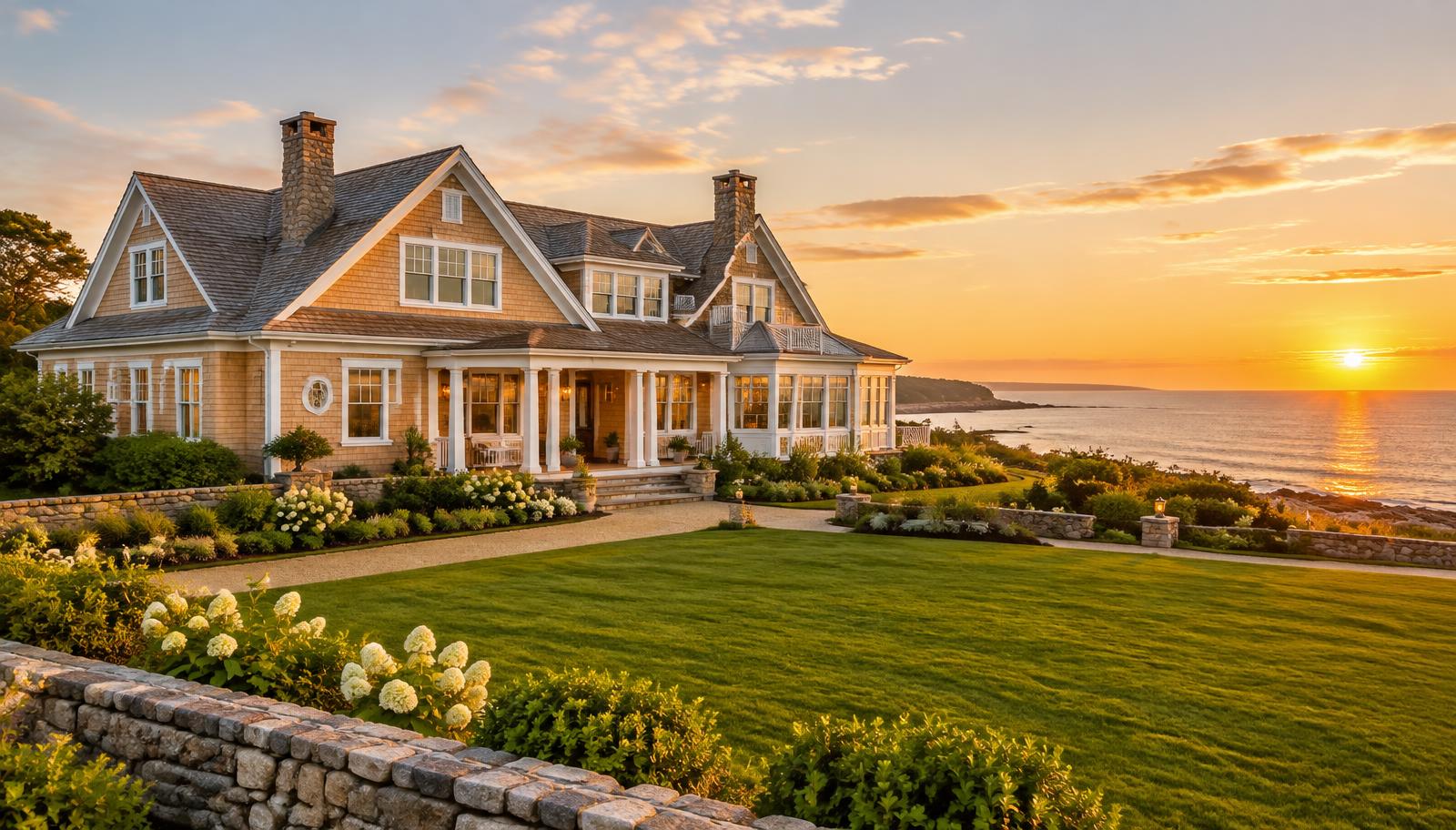
Short answer: a Massachusetts luxury construction loan is short-term, business-purpose financing for building or rebuilding a high-value home for sale or investment. The loan is usually sized by two tests, a share of total project cost and a share of projected completed value, and construction money is released in draws as work is verified. The terms you get depend less on the county name and more on how well your budget, equity, timeline and exit are documented.
This guide is written for builders and investors comparing financing options before they commit to a site. It covers how lenders size a luxury loan, what the real cost of capital looks like, how to structure the deal and how project types differ across eight Massachusetts counties. For A4's county-by-county review notes and current program terms, see our luxury new construction loans in Massachusetts page. This article is general information, not legal, tax or investment advice.
A4 Capital Partners finances non-owner-occupied, business-purpose projects only. If you are building a home to live in, you need a consumer construction mortgage instead.
Why Luxury Builds Are Financed Differently
A standard construction loan and a luxury construction loan use the same mechanics. What changes is the size of the numbers and how much of the risk sits in a few line items. On a high-end home, custom millwork, imported finishes, site work and landscaping can each move the budget materially, and the projected sale price usually rests on a small number of comparable sales.
That is why many builders working on luxury homes use private or balance-sheet lenders. Bank construction lending can be slower and more rigid on experience, liquidity and loan size. A private lender typically decides faster and is more flexible on structure, in exchange for higher pricing. Whether that trade makes sense depends on how much time matters to your deal.
How a Lender Sizes Your Loan: A Worked Example
Most construction lenders apply a loan-to-cost (LTC) limit and a limit tied to after-repair or completed value (ARV), then lend the lower of the two. Here is an illustrative example using round numbers. It is not a quote or a market estimate.
- Land or teardown purchase: $2,400,000
- Hard and soft construction budget, with contingency: $3,600,000
- Total project cost: $6,000,000
- Projected completed value, supported by comps: $8,000,000
At 85% LTC, the cost test allows up to $5,100,000. At 75% loan-to-value on the completed value, the value test allows up to $6,000,000. The lower figure, $5,100,000, sets the loan, so the borrower funds the remaining $900,000 of project cost plus closing costs, fees and reserves.
Two takeaways for planning: if your completed value is conservative, the value test, not the cost test, may limit you. And a budget that later grows does not automatically grow the loan, so overruns usually come out of your pocket.
The Real Cost of Capital on a Luxury Build
Comparing lenders by interest rate alone is the most common financing mistake on a large build. To compare offers fairly, add up the total cost over the time you expect to hold the loan:
- Interest: confirm whether interest accrues on the full commitment or only on funds actually drawn. On a long build, that difference can be large.
- Points: upfront fees charged as a percentage of the loan.
- Draw and inspection fees: charged each time construction funds are released.
- Extension fees: what it costs to add months if the build or sale runs long.
- Interest reserve: whether interest is prepaid from loan proceeds or paid monthly from your cash.
- Carrying costs: property tax, builder's risk insurance and utilities during construction and marketing.
A slightly higher rate with faster closing, fewer fees and quicker draws can cost less overall than a cheaper headline rate with slow funding that stalls your contractor.
Structuring the Deal Before You Apply
Decide on land and construction together or separately
If you already own the lot, its equity typically counts toward your contribution. If you are buying, ask whether the lender will fund part of the acquisition at closing with the build budget held back, or whether you must buy the land first. This decision drives your cash needs on day one.
Build the budget for the finish level you will actually sell
Buyers of luxury homes pay for specification. A budget that underprices finishes produces a home that may not support the projected value; one that overbuilds can erase the margin. Tie each major allowance to the comps you are using for the exit.
Plan cash for the gap between work and reimbursement
Draws reimburse completed work, so you or your contractor typically front each phase. Keep enough liquidity to cover the largest phase, plus interest and carrying costs, while you wait for the inspection and funding.
Choose a primary and backup exit
The usual exit is a sale. A backup can be a refinance into a long-term rental loan, if the property and borrower qualify at that time. Lenders give more weight to a plan that still works if the sale takes longer than expected.
Massachusetts Luxury Construction by County
A4 focuses on eight Massachusetts counties. The core markets are Norfolk, Plymouth, Barnstable, Suffolk, Nantucket and Dukes, while Middlesex and Essex are handled selectively by town. The sections below describe the kinds of projects A4 finances in each county and the financing decisions that matter most for them.
Norfolk County: Wellesley, Needham, Dover, Westwood, Milton and Cohasset
Norfolk is a core county for luxury single-family construction, teardown/rebuild and major renovation. For a replacement-home strategy, the key financing question is how the acquisition price of the existing house is treated: as land basis that counts toward cost, with demolition budgeted as its own line. Builders running several homes at once should also discuss how their pipeline and liquidity are reviewed across projects.
Plymouth County: Hingham, Duxbury, Scituate, Norwell and Marshfield
Plymouth covers South Shore luxury homes, coastal construction and renovation. Where a property is coastal, insurance and permitting can change both the budget and the timeline, so get insurance quotes and confirm approval status before you finalize the loan request. Build those costs into the total project cost so they are financed or reserved for, not discovered later.
Barnstable County: Chatham, Orleans, Falmouth, Sandwich and Osterville
Barnstable covers second-home construction, waterfront projects and major renovation. Because A4 lends on investment projects only, the plan should be a sale or an investment rental, not personal use. Commercially, the timing of completion relative to your intended sale window matters, since it affects how many months of interest and extension risk you carry.
Dukes County: Edgartown, Chilmark, West Tisbury and Vineyard Haven
On Martha's Vineyard, A4 considers luxury construction and estate renovation on a select basis. For island projects, the financing conversation usually centers on a realistic schedule and a contingency large enough for longer procurement and labor timelines, and on reserves that keep the loan current if completion slips.
Nantucket County: island-wide
Nantucket is a low-volume, high-loan-size market where A4 considers luxury ground-up construction, high-end renovation and completion financing. Completion financing, also called cost-to-complete, can replace a stalled or maxed-out loan on a partly built home. It requires clear documentation of what is done, what remains and what it will cost to finish.
Suffolk County: Boston, Revere, Winthrop and Chelsea
Suffolk is the most varied county on the list: bridge, multifamily, condo, redevelopment and value-add projects rather than single estate homes. The structure should match the exit. A condo project repaid unit by unit is financed differently from a multifamily building that will be refinanced once it is leased, so decide the exit before choosing the loan.
Middlesex County: Weston, Lexington, Concord, Wayland, Sudbury and Acton
In the western and northern Boston suburbs, A4 works selectively on teardown/rebuild and infill. Since review is town-by-town, lead with the specific parcel and town rather than a regional story, and show sales of comparable new homes in that same town.
Essex County: Manchester-by-the-Sea, Marblehead, Beverly to Andover
Essex covers North Shore luxury coastal homes and suburban ground-up construction, also handled selectively. A coastal home and an inland suburban build in the same county can have very different valuations and risks, so treat each as its own deal when estimating leverage.
How to Compare Massachusetts Construction Lenders
- Speed to terms and closing: how quickly will you get a term sheet and fund once the file is complete?
- Draw turnaround: how many days from draw request to funds, and who performs inspections?
- Leverage on both tests: ask for the LTC and value-based limits, not just one.
- Interest on drawn funds: confirm how and when interest accrues.
- Loan size range: make sure your deal fits the lender's minimum and maximum.
- Extensions and flexibility: what happens if the schedule or sale slips.
- Repeat borrowing: whether the lender can support your next project on similar terms.
Where A4 Capital Partners Fits
A4 Capital Partners is a balance-sheet lender for builders and investors. Its new construction loans cover ground-up builds, spec homes and teardown/rebuild projects, with loan sizes of $500K–$12MM, rates starting at 8.5%, loan-to-cost up to 85%, loan-to-value up to 75% and no prepayment penalty, subject to underwriting. Terms are set for each deal after review of the property, budget, borrower and exit.
A4 generally works with borrowers who have completed projects before. A complete package, with site control, plans, permit status, an itemized budget, contractor details, a schedule, comps and a summary of your track record, is the fastest route to terms.
Frequently Asked Questions
What is a Massachusetts luxury construction loan?
It is short-term financing for building or substantially rebuilding a high-value home for sale or investment, with construction funds released in draws. A4 offers these loans for business-purpose, non-owner-occupied projects.
How much can I borrow for a luxury build in Massachusetts?
Lenders usually apply a loan-to-cost limit and a completed-value limit and lend the lower amount. A4 lends $500K–$12MM, with loan-to-cost up to 85% and loan-to-value up to 75%, subject to underwriting.
Can I finance a teardown and rebuild?
Yes, for investment projects. The purchase price of the existing house is typically treated as land basis, and demolition, site work and construction are budgeted separately.
Is interest charged on the full loan amount?
It depends on the lender. Some charge interest only on funds drawn, others on the full commitment. Confirm this before comparing offers, because it can change the total cost significantly.
Can I get completion financing for a partly built home?
Some lenders, including A4 in select markets such as Nantucket, consider cost-to-complete financing. You will need to document finished work, remaining scope and the cost to finish.
Do you finance second homes on Cape Cod or the islands?
A4 finances investment projects intended for sale or rental, not homes for personal use. Eligibility depends on the property, borrower and underwriting.
How fast can a luxury construction loan close?
A4's average processing time is 5–10 days once the file is complete, subject to appraisal, title and underwriting.
Talk to A4 About Your Massachusetts Project
If you are pricing a luxury build in Massachusetts, call +1 203-457-3787, email originations@a4cp.com or submit your project through the application on this site.