
The Massachusetts Teardown Opportunity: What Real Estate Investors Should Know Before Rebuilding
Blogs·Nov 18, 2026
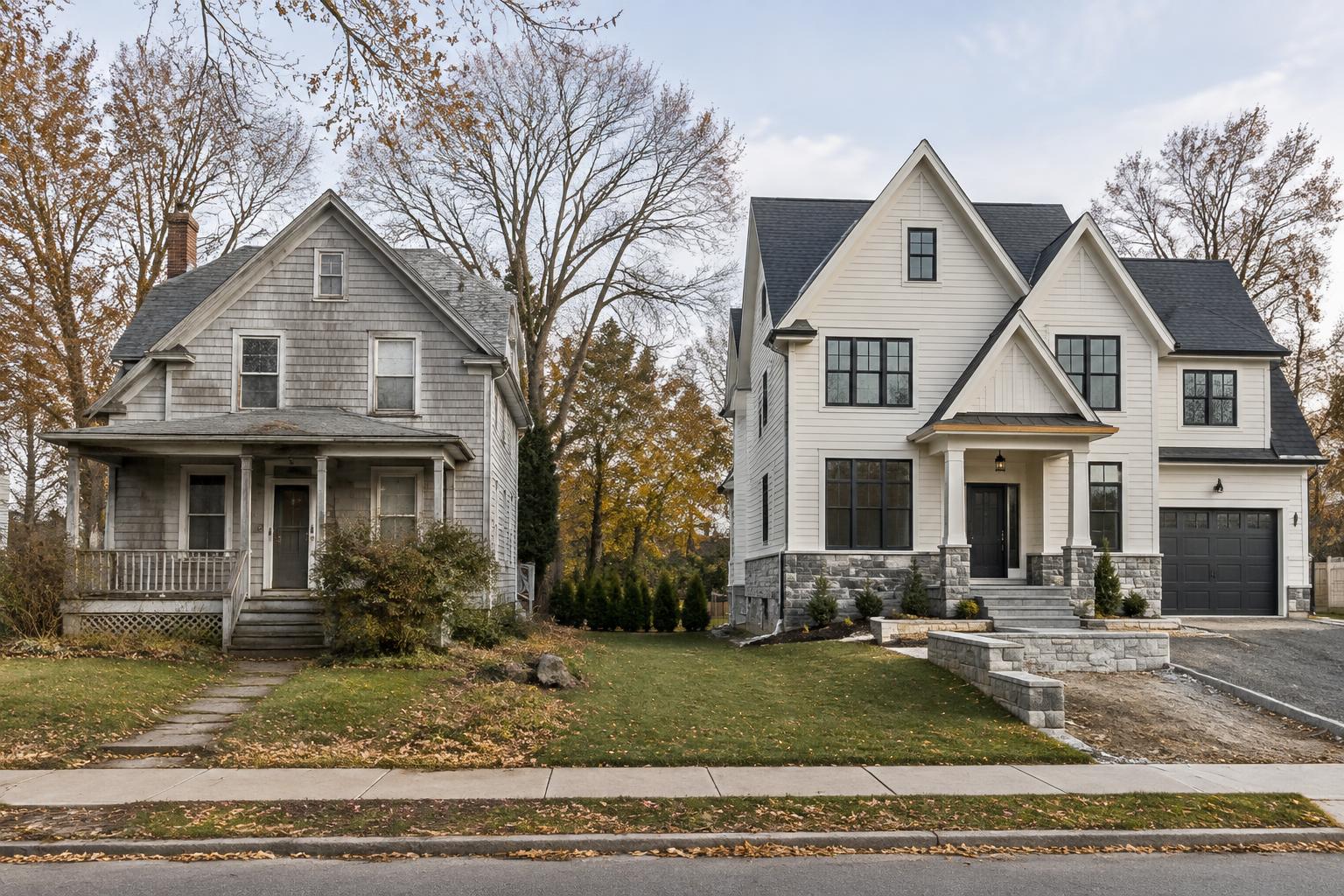
An investor walks through an older Massachusetts house with narrow rooms, tired systems and a foundation that needs investigation. The address is appealing; the building is less convincing. Replacing it might create a better investment product, but the purchase price buys a parcel with constraints—not a guaranteed right to build the home shown in the investor’s sketch.
Before committing capital, compare the existing structure’s usable value with the cost and feasibility of replacement. Construction loans in Massachusetts may support eligible business-purpose redevelopment, but financing cannot resolve an unbuildable design or an acquisition price that leaves no room for execution risk. This guide is for investment projects, not owner-occupied home construction.
Why Investors Consider Massachusetts Teardown Opportunities
The investment case begins with a mismatch: a useful location and parcel, but a building that may be expensive to adapt. Extensive modernization can still leave awkward circulation, limited ceiling heights or compromised room arrangements. Rebuilding offers design freedom, provided the replacement is permitted and commercially justified.
A dated house in Newton or Brookline is a reason to investigate, not evidence of an attractive return. Test whether buyers actually value the proposed layout and specifications through relevant completed sales and local broker input. Age alone establishes neither demolition suitability nor demand for a larger luxury home.
Teardown vs. Renovation: Which Makes More Financial Sense?
Compare two complete development plans, not a renovation estimate against a builder’s construction-only price. Have an engineer assess whether the existing foundation and structure support the retained design. Renovation may preserve useful improvements; replacement may remove limitations while introducing a different approval and cost burden.
| Decision factor | Renovation | Teardown and rebuild |
|---|---|---|
| Physical starting point | Retain suitable structure; investigate hidden defects. | Price removal, site preparation and a new foundation. |
| Design flexibility | Work within retained dimensions and structural limits. | Design within the parcel’s permitted building envelope. |
| Budget uncertainty | Allow for repairs revealed after opening walls. | Allow for demolition, ground conditions and utility work. |
| Approvals and timing | Confirm reviews for alterations and retained features. | Confirm demolition and replacement approvals separately. |
| Exit evidence | Use comparable renovated homes. | Use comparable new homes of supported size and quality. |
Neither option wins automatically. If retaining the building produces a credible finished product, review financing for substantial residential renovation alongside the rebuild approach. A more expensive finished home is not necessarily a more profitable investment.
What to Evaluate Before Buying a Massachusetts Teardown
Due diligence should establish both the parcel’s usable capacity and the capital needed to develop it. Resolve material unknowns before finalizing acquisition, with contract protections reviewed by your attorney.
- Land value and comparables: work backward from supported net exit proceeds to an acquisition price, rather than accepting the seller’s land-value narrative.
- Building condition: commission appropriate structural and systems assessments to test whether renovation remains viable.
- Zoning and use: verify the proposed residential use, unit count and approval pathway with local officials.
- Setbacks and coverage: have a survey and preliminary design establish where, and how much, you can build.
- Utilities: confirm service availability, capacity, disconnection and reconnection responsibilities; inspect existing infrastructure.
- Demolition logistics: price equipment access, neighboring-property protection, hauling, disposal and clearing.
- Environmental exposure: obtain qualified advice on suspect asbestos, lead-related work and other site concerns before disturbing materials.
- Permits and historic status: identify relevant reviews and outstanding decisions, not merely an expected permit date.
- Construction feasibility: test access, grading, drainage, foundation assumptions and contractor availability.
- Costs and exit: reconcile the entire budget with a realistic sale or investment-refinance plan.
The Financial Side: Budget Beyond Purchase and Construction
Purchase price plus construction cost is an incomplete model. Acquisition closing expenses, demolition, clearing, architectural and engineering services, permits, utility work, insurance and financing costs all consume capital before an investor realizes exit proceeds. Include marketing and sale costs, or the expenses of leasing and refinancing if retaining the property.
Use a budget worksheet with these separate groups:
- Acquire: purchase, title review and transaction expenses.
- Prepare: investigation, hazardous-material work where necessary, demolition, disposal and site infrastructure.
- Design and build: professional fees, permits, materials, labor and contractor scope.
- Carry and exit: insurance, taxes, utilities, financing and disposition expenses.
- Protect: construction contingency, schedule reserves and cash between disbursements.
Record each line’s quoted amount, exclusions, payment date and funding source. Then stress-test a delayed completion and a lower net sale result separately. Do not count the same reserve as both construction contingency and cash for an extended marketing period.
A useful acquisition ceiling is supported net exit proceeds, less non-acquisition costs and the investor’s required risk allowance and return. This is a planning framework, not a valuation or investment recommendation; revisit it when scope, financing or market evidence changes.
How Construction Loans in Massachusetts Support Rebuilding
Construction financing evaluates an unfinished project as well as its sponsor and collateral. Unlike a traditional mortgage on a completed property, ground-up construction loans generally release construction proceeds in stages against an agreed budget and funding conditions.
Some arrangements combine eligible acquisition funding with construction; others require separate purchase capital or existing site ownership. Do not assume demolition, land acquisition and every soft cost are covered. Confirm eligible expenses and their funding timing with the lender before committing to a purchase or contractor deposit.
For investors comparing new construction financing in Massachusetts, the practical question is whether proceeds become available when bills are due. Align maturity with approvals, construction and the intended exit—not just the builder’s work period.
What Lenders Evaluate in a Teardown Project
Lenders generally look for a coherent completion-and-repayment plan. They may review relevant borrower experience, property ownership or acquisition arrangements, design specifications, demolition and construction budgets, contractor qualifications, equity, available capital and projected completed value.
Explain unresolved approvals and identify who is responsible for them. Keep the plans, appraisal assumptions and priced scope consistent. Borrower experience matters, but so does whether the selected team has delivered comparable work. Individual underwriting standards vary; these considerations are not a statement of A4-specific eligibility requirements.
Massachusetts Development Details That Change the Decision
Local zoning comes before the replacement design
Massachusetts municipalities administer their own zoning rules; Boston has a separate enabling framework, as the state’s zoning and building-code overview explains. Confirm current parcel-specific requirements with the relevant authority rather than treating a statewide summary as permission to rebuild.
On a constrained Cambridge or Somerville site, ask your design team to test setbacks, coverage, access and construction staging before pricing a larger replacement. In Greater Boston, an existing footprint is not proof that a new building can occupy the same envelope. Have local counsel examine any nonconforming conditions and reconstruction implications.
Historic and environmental questions belong before demolition
Check historic designation, local review rules and recorded preservation restrictions independently. The state’s historic-property due-diligence resource distinguishes different forms of designation and municipal oversight. An old building’s appearance does not tell you which controls apply.
MassDEP regulates asbestos-related demolition and renovation activity and provides asbestos and demolition notification guidance. Obtain qualified assessment and scope-specific advice before disturbance. For lead-related work, review Massachusetts deleading and lead-safe renovation regulations with appropriate professionals rather than assuming demolition removes compliance concerns.
Location changes logistics, not guaranteed returns
For North Shore or South Shore parcels, investigate actual drainage, access and utility conditions instead of assigning a blanket regional cost premium. For Worcester or Springfield investments, build the exit around local completed-home or rental evidence, not Greater Boston pricing assumptions.
Ask contractors how seasonal weather affects excavation, foundations, site protection and trade sequencing. Confirm crew availability and procurement lead times using project-specific commitments. Requirements and schedules vary by municipality and scope; no statewide permit timeline is assumed here.
Common Teardown Mistakes—and Better Alternatives
- Assuming demolition is cheaper: compare full retained-building and replacement budgets.
- Accepting a thin demolition quote: check disconnections, abatement, disposal and site-work exclusions.
- Designing before zoning review: establish the buildable envelope first.
- Ignoring utilities: obtain provider input and contractor pricing before acquisition.
- Using contingency as spare spending: preserve it for identified execution uncertainty.
- Selecting contractors on price alone: verify relevant work, references, insurance and capacity.
- Buying before funding is mapped: reconcile acquisition cash, construction proceeds and interim liquidity.
- Overstating the exit: exclude unsupported appreciation and budget a less favorable result.
A Practical Pre-Construction Checklist
- Complete property, title, boundary and easement review.
- Confirm zoning, permitted use and the preliminary building envelope.
- Evaluate the existing building and demolition feasibility.
- Arrange environmental assessment where appropriate.
- Reconcile architectural and engineering plans with site constraints.
- Obtain a detailed construction budget with explicit exclusions and reserves.
- Verify contractor qualifications, scope and availability.
- Map financing, equity and cash needed between draws.
- Confirm the applicable permitting and notification sequence.
- Build a dependency-based schedule and realistic exit strategy.
Choosing Financing for a Massachusetts Redevelopment
A suitable partner should understand business-purpose development and explain eligible costs, fees, draw administration, funding conditions and schedule changes clearly. Ask who manages requests after closing and how proposed scope changes are evaluated.
A4 Capital Partners is a potential resource for qualified investors and developers considering residential construction. Review Massachusetts construction financing for the commercial program context. Suitability and final terms require project review; this article does not promise approval or funding for every redevelopment.
Frequently Asked Questions About Massachusetts Teardowns
Is it possible to get a construction loan for a teardown and rebuild project in Massachusetts?
Yes, eligible business-purpose redevelopment projects may qualify for construction financing. Approval depends on the lender’s review of the property, demolition scope, replacement plans, budget, sponsor and repayment strategy. Confirm the specific project fit before purchasing; an older house in an attractive location does not establish that the proposed rebuild is permitted or financeable.
Can construction financing include the cost of purchasing the property?
Some structures include eligible acquisition funding; others require separate acquisition capital or existing ownership. Ask how the purchase basis, any existing debt and land equity will be evaluated. A loan for buying the property does not guarantee subsequent construction funding, so establish how both phases will be funded before committing to the purchase.
Is demolition typically included in a construction loan?
Demolition is not automatically covered. A lender may consider approved demolition and related site expenses within a construction budget, but eligibility, timing and disbursement conditions vary. Identify hazardous-material work, disconnection, hauling and disposal separately, then obtain confirmation of which costs can be funded and which require borrower cash.
What should investors evaluate before purchasing a teardown property?
Evaluate what can legally and physically replace the building, not only its current condition. Review title, boundaries, zoning, historic status, utilities, environmental concerns and demolition access with local professionals. Compare a full renovation budget against a full rebuild budget, supported by relevant completed-property evidence and a workable sale or refinance strategy.
How do lenders evaluate the feasibility of a redevelopment project?
Lenders generally reconcile the site, approved scope, cost to complete, borrower capital and repayment plan. They may assess comparable finished properties, contractor qualifications, relevant sponsor experience and unresolved approvals. Standards differ, but inconsistent plans or unsupported cost allowances make it harder to establish that the project can be completed within the available funding.
What permits may be needed before demolishing and rebuilding in Massachusetts?
Demolition and building permits, utility coordination and additional reviews may apply, depending on the municipality and parcel. Historic, environmental or other site-related approvals can also matter. Ask local building, planning and preservation officials to identify the applicable sequence, and have qualified professionals confirm any required state notifications before work begins.
How much contingency should investors consider in a teardown project budget?
There is no universal contingency percentage that makes every teardown adequately funded. Size reserves around unresolved site conditions, quote reliability, design completeness and schedule exposure. Discuss the allowance with the contractor and lender, and keep cash for carrying costs and funding gaps separate so the same reserve is not counted against several risks.
How are construction loan funds released during a rebuild project?
Construction proceeds are generally released through draws under the loan agreement’s budget and verification conditions. Requirements may include invoices, progress checks, inspections or other supporting records. Confirm treatment of deposits, demolition and stored materials before signing contractor payment terms; approved financing may still leave a working-capital gap before eligible proceeds are released.
Turn a Redevelopment Opportunity into a Planned Investment
An older home becomes a credible teardown investment only after the land, replacement scope, approval path, complete costs and repayment plan hold together. Compare renovation honestly, price the work that happens before construction and protect liquidity throughout execution.
Considering a Massachusetts teardown and rebuild? Explore construction financing for your next Massachusetts investment with A4 Capital Partners. Bring a tested project—not just an appealing address—to the financing conversation.
General educational information, not legal, tax or investment advice. Consult qualified local legal, design, environmental and financial professionals for your property and project.