
New Jersey Luxury Construction Loan: How to Finance High-End Builds Across 6 Counties
Blogs·Oct 23, 2026
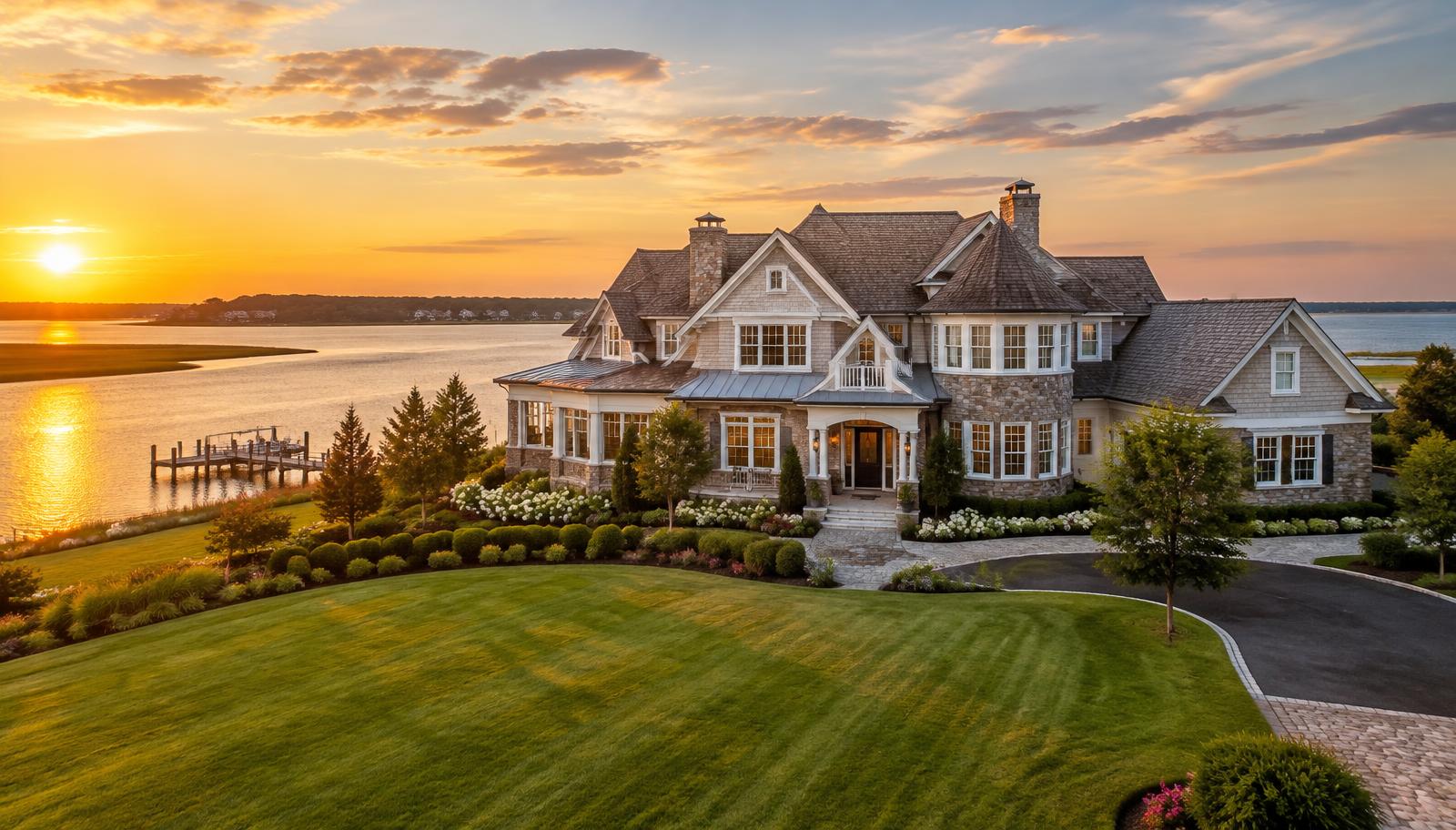
A New Jersey luxury construction loan is short-term, business-purpose financing for building or substantially rebuilding a high-value home that will be sold or held as an investment. The loan is usually sized on both total project cost and the finished home's value, funded in draws as the work is done, and repaid when the home sells or is refinanced. It is not a mortgage for a house you plan to live in.
This guide is about the money side of a luxury build: how a lender arrives at your loan amount, what the loan really costs once fees and timing are counted, and how to put a deal together so it holds up in underwriting. If you want A4's county-by-county project notes and terms, see our luxury new construction loans in New Jersey page. This article covers what to work out before you get there.
Who This Financing Is Built For
Luxury construction lending in New Jersey generally serves three kinds of borrowers:
- Spec builders buying a lot or an older house, building a new home and selling it on completion.
- Investors in teardown/rebuild projects who see more value in a new home than in renovating the existing one.
- Developers finishing a stalled or partly built home who need capital to complete the remaining scope.
What these borrowers share is a business plan with a defined exit. Lenders like A4 underwrite the project and the sponsor, not personal income, which is why these loans are faster and more flexible than bank construction financing, and also why they cost more.
How Lenders Size a Luxury Construction Loan
Most private construction lenders apply two tests and lend the lower result:
- Loan-to-cost (LTC): the loan as a share of the total approved project cost, including land or acquisition, demolition, hard costs, soft costs and contingency.
- Loan-to-value (LTV): the loan as a share of the appraised value, which for a build is usually the projected completed value.
An Illustrative Example
The figures below are round numbers chosen to show the math. They are not a quote or a typical deal.
- Teardown purchase (treated as land basis): $1,800,000
- Demolition, site work, hard and soft costs, contingency: $2,700,000
- Total project cost: $4,500,000
- Projected completed value: $6,200,000
At 85% LTC, the cost test allows $3,825,000. At 75% LTV, the value test allows $4,650,000. The loan is set at the lower figure, $3,825,000, and the builder brings the remaining $675,000 plus closing costs, interest reserves and working capital.
Two lessons follow. First, a higher appraisal does not raise the loan when cost is the binding limit; cutting costs or adding equity does. Second, if the completed-value estimate falls, the value test can become the limit, so conservative comparable sales protect your leverage.
The True Cost of the Loan
Comparing lenders on interest rate alone is the most common mistake builders make. Ask every lender for these items in writing:
- Origination points paid at closing, and any exit fee.
- Interest on drawn funds versus the full commitment. On a construction loan, paying interest only on money actually drawn can save a meaningful amount early in the build.
- Draw and inspection fees per request, and how quickly funds are released after an inspection.
- Extension terms if the build runs long: cost, conditions and how many are allowed.
- Prepayment terms. A spec builder who sells early should not be penalized for it.
- Required interest reserves held back from the loan.
Then model the total cost over the time you actually expect to carry the project, including a delay scenario. A loan with a lower rate but higher fees, slow draws or expensive extensions can cost more than one with a higher headline rate.
Structuring the Deal Before You Apply
Budget at the Finish Level the Buyer Expects
Luxury budgets fail when the finish level is set by the builder's preference rather than by the comparable homes the buyer is choosing between. Tie your specifications to recent sales in the same town, and itemize the budget so each draw maps to a clear line.
Carry Real Contingency
Custom millwork, imported materials, specialty systems and site conditions all add cost risk. A contingency line that the lender can see, and that you do not plan to spend, makes the file stronger and protects you from funding gaps.
Plan for Cash Between Draws
Draws reimburse completed work. You will often pay subcontractors before the lender's inspection and release, so keep enough working capital to cover the largest phase of the build.
Confirm Approvals Early
Know which municipal and, where relevant, environmental approvals remain before setting the schedule. Requirements vary by town and site, so confirm them with the municipality rather than assuming a timeline.
Write Down Two Exits
Your primary exit is usually a sale. Your backup might be a refinance into a longer-term loan or a lower list price that still repays the loan. Lenders want to see both.
Financing Considerations by New Jersey County
The six counties below are where A4 focuses its New Jersey construction lending. For each, the question is not what the market is like but what changes in how the deal is financed.
Monmouth County
Towns: Rumson, Fair Haven, Spring Lake, Sea Girt, Brielle, Colts Neck and Holmdel. Monmouth combines coastal and waterfront builds with inland estate projects, and the financing differs. Waterfront and shore projects can carry higher insurance and site costs, so put those in the budget and the carrying model rather than treating them as surprises. Large-scale renovations here are also common, and lenders will want a clear line between what is being kept and what is new construction.
Bergen County
Towns: Ridgewood, Wyckoff, Franklin Lakes, Glen Rock, Tenafly and Cresskill. Much of the work here is teardown/rebuild. The financing issue is the acquisition basis: you are paying for a house you plan to demolish, so lenders treat that price as land value. If you overpay for the existing home, the loan-to-cost math tightens immediately. Price the acquisition against the finished-home exit, not the existing house.
Essex County
Towns: Millburn/Short Hills, Montclair, Glen Ridge, Livingston, Maplewood and South Orange. Essex projects range from new single-family infill to high-end renovation and select small multifamily. Each is underwritten differently: a for-sale luxury home is judged on sales comparables, while a small multifamily held for rent is judged on income and refinance potential. Pick one strategy per loan request and document it.
Morris County
Towns: Chatham, Madison, Morristown, Morris Township, Florham Park and Denville. Morris projects are mostly single-family construction and renovation in established suburbs. The commercial risk is over-building for the street. Size the home and finish level to what has sold nearby, and carry the project through a realistic marketing period, not just to the end of construction.
Union County
Towns: Westfield, Summit, Cranford, Scotch Plains, Fanwood and Berkeley Heights. Like Bergen, much of this is teardown/rebuild and single-family renovation. Time is a cost here: demolition, approvals and a build sequence can stretch the schedule, and every extra month adds interest, taxes and insurance. Build a delay case into your numbers and confirm the lender's extension terms before closing.
Middlesex County
Towns: Metuchen, Edison, East Brunswick, South Brunswick, Highland Park and Woodbridge. Middlesex leans toward traditional single-family investment, renovation, selective infill and small multifamily rather than top-end luxury. Loan sizes may be smaller, so check that the project meets the lender's minimum, and expect the exit to be judged on a broader set of comparable sales or rental income.
How to Compare Construction Lenders
- Is the lender lending its own capital, or does it need to sell or syndicate the loan?
- Who orders draw inspections, and how many days from request to funding?
- Is interest charged on drawn funds or the full commitment?
- What happens if the schedule slips: extension cost, conditions and limits?
- Will the lender consider completion financing for a partly built home?
- Can you speak directly with the person making the credit decision?
Where A4 Fits
A4 Capital Partners is a balance-sheet lender financing business-purpose construction for experienced builders and investors. On New Jersey luxury construction loans, A4 offers:
- Loan sizes from $500K to $12MM
- Rates starting at 8.5%
- Loan-to-cost up to 85%
- Loan-to-value up to 75%
- Average processing of 5–10 days
- No application fee
All terms are subject to underwriting. For our broader program, including ground-up and spec-home financing outside New Jersey, see new construction loans.
Frequently Asked Questions
What is a New Jersey luxury construction loan?
It is short-term, business-purpose financing for building or substantially rebuilding a high-value home for sale or investment, funded in draws as work is completed. A4 does not finance owner-occupied homes.
How much can I borrow for a luxury build in New Jersey?
Lenders usually apply a loan-to-cost limit and a completed-value limit and lend the lower amount. A4 lends $500K–$12MM with loan-to-cost up to 85% and loan-to-value up to 75%, subject to underwriting.
Can I finance a teardown and rebuild?
Yes, for investment projects. The price of the existing house is generally treated as land basis, and demolition, site work and construction are budgeted separately.
Is interest charged on the full loan amount?
It depends on the lender. Some charge interest only on funds drawn, others on the full commitment. Confirm this before comparing offers.
Can I get financing to finish a partly built home?
Some lenders, including A4, consider completion financing. You will need to document the work finished, the remaining scope and the cost to complete.
Do construction draws cover costs I have already paid?
Draws typically reimburse completed, inspected work. Keep enough working capital to pay for the largest phase before its draw is released.
How fast can A4 process a construction loan?
A4's average processing time is 5–10 days once the file is complete, subject to appraisal, title and underwriting.
Talk to A4 About Your New Jersey Project
Have a lot under contract, a teardown in mind or a build that needs completion capital? Call +1 203-457-3787, email originations@a4cp.com, or submit your deal through the application on this site.